
"coffee growing Haiti"
500 article(s) found

Introduction of Flavor characteristics of Fine Coffee beans in Dominica Santo Domingo Coffee Variety producing area
In 1677, about 4,000 French lived in 11 villages in the west of the island. In 1697, France and Spain ceded the western part of the island to France according to the Leswick Treaty of the Alliance War, formally recognizing French sovereignty over Haiti in the western part of the Spanish island, and the eastern part of the Spanish island was called East Santo Domingo. France continues to develop its agricultural economy on the island of Hispaniola.

A brief introduction to the origin, development, history and culture of Dominica boutique coffee beans with excellent acidity
The best place to produce is the Barahona region in the southwest, but Juncalito and Ocoa also produce a fine coffee, Santo Domingo coffee, which is characterized by freshness and elegance, fullness, excellent acidity and pleasant aroma, so it is worth it. Unlike coffee produced in Haiti, Dominica has a total of

53 coffee producing areas in the world
Seven. Haiti's Good Coffee from Politically Troubled Land Despite its well-known problems and fluctuating coffee quality, Haiti is still trying to produce some quality coffee. Most of the coffee produced in Haiti is grown in a purely natural state, not intentionally but as a result of material shortages, because farmers are too poor to buy

A delicious boutique Dominican Santo Domingo Coffee Flavor description method
Fresh and elegant, full of particles, excellent acidity and pleasant fragrance. The Dominican Republic is located in the east of the island of Haiti in the West Indies, bordering the Republic of Haiti to the west, the Atlantic Ocean to the north and the Caribbean Sea to the south. With an area of about 49000 square kilometers and a population of 7.1 million, the Dominican Republic and the Republic of Haiti coexist on an island bordering Haiti. Like its neighbor, Dominica
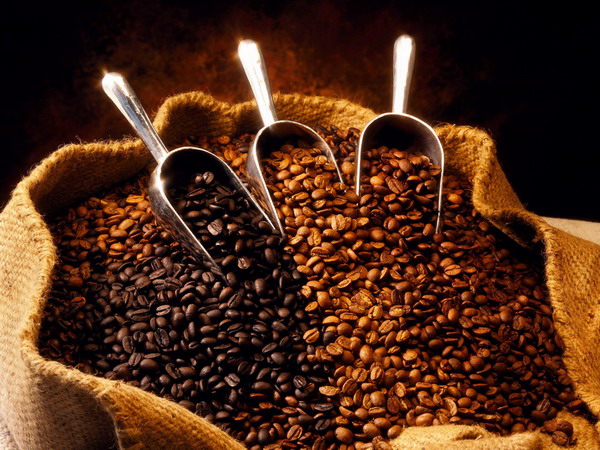
Guatemala Haiti Honduras Jamaica Blue Mountain Coffee Martinique Mexico
Guatemala's extra-hard coffee beans are full, delicious and balanced, and the coffee brewed with them is pure and rich. Guatemala coffee once enjoyed a reputation as the best coffee in the world, but quality declined for a while. Happily, however, its popularity is gradually being restored. In 1750, Father Jesuit introduced coffee trees to Guatemala,

Healthy black coffee
The earliest coffee on the island of Jamaica came from Haiti in Latin America in 1728. By 1790, some coffee farmers among the refugees in exile from Haiti had settled in the Blue Mountains and brought coffee-growing technology here. In 1838, Jamaica abolished slavery and allowed liberated slaves to cultivate their own land. Free slaves moved to the mountains to specialize in planting.

Healthy black coffee, Jamaica's Blue Mountain Coffee.
The earliest coffee on the island of Jamaica came from Haiti in Latin America in 1728. By 1790, some coffee farmers among the refugees in exile from Haiti had settled in the Blue Mountains and brought coffee-growing technology here. In 1838, Jamaica abolished slavery and allowed liberated slaves to cultivate their own land. Free slaves moved to the mountains to specialize in planting.
Boutique coffee basic common sense healthy black coffee
The earliest coffee on the island of Jamaica came from Haiti in Latin America in 1728. By 1790, some coffee farmers among the refugees in exile from Haiti had settled in the Blue Mountains and brought coffee-growing technology here. In 1838, Jamaica abolished slavery and allowed liberated slaves to cultivate their own land. Free slaves moved to the mountains to specialize in planting.

Introduction to the flavor and taste of high-quality coffee beans in Dominica Coffee Manor
After the return of Santo Domingo to Spanish rule during the Haitian occupation (1821-1844), the local people gradually formed a consensus on independent statehood. On November 30th, 1821, the former Governor of Santo Domingo, General Jos Nez de Cceres, proclaimed the founding of the country, named Haiti, Spain, and expected to merge under the Greater Colombian State led by President Bolivar of South America. [3] but

Dominica Santo Domingo Coffee Flavor description Grinding characteristics introduction to the taste of varieties in producing areas
Located in the Jarabacoa region near Siwao, it has the largest farm in Dominica, Ramirez Manor (RamirezEstates), which mainly grows Kaddura varieties, and most of the coffee produced is sold to Europe, the United States and other western countries and regions. Ramirez Manor itself produces coffee in an environmentally friendly way. Coffee from Dominica is made with A.
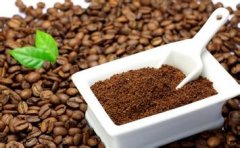
The taste of full-bodied Dominican fine coffee beans grind roasting degree processing method
The Dominican Republic is a favorite country for travelers. It borders Haiti on Hispaniola in the West Indies, Dominica to the west and Haiti to the east. The whitest, softest white beaches in the world, cool ocean breezes from the Atlantic and Caribbean and warm tropical sunshine make it a holiday paradise on par with the Maldives and Hawaii

Flavor and taste characteristics of coffee manor in Dominica Coffee Bean introduction to Santo Domingo Coffee
After Santo Domingo returned to Spanish rule, the local people gradually formed a consensus on independent statehood. On November 30th, 1821, the former Governor of Santo Domingo, General Jos Nez de Cceres, proclaimed the founding of the country, named Haiti, Spain, and expected to merge under the Greater Colombian State led by President Bolivar of South America. [3] but in February 1822, nine weeks later, Haiti's

Healthy and delicious black coffee Blue Mountain Coffee of Jamaica
The earliest coffee on the island of Jamaica came from Haiti in Latin America in 1728. By 1790, some coffee farmers among the refugees in exile from Haiti had settled in the Blue Mountains and brought coffee-growing technology here. In 1838, Jamaica abolished slavery and allowed liberated slaves to cultivate their own land. Free slaves moved to the mountains to specialize in planting.

Flavor description of Dominican Santo Domingo Coffee with lingering aftertaste introduction to the taste characteristics of boutique coffee
Coffee in Dominica has two main characteristics, which vary according to the region and variety of coffee produced. Tibica coffee, produced in the main producing area of Baraona, has the soft taste and light aroma peculiar to the Caribbean, while the highland coffee in Siwao in the central mountain area has a strong taste. The two producing areas have their own characteristics, which are located in the Jarabacoa area near Sivao.

Dominican Santo Domingo coffee with rich aroma and rich taste
In 1795, France and Spain signed the Treaty of Basel in Switzerland, agreeing to cede the Santo Domingo area east of the Spanish Dominican island to France, making the Spanish island a complete French colony. Six years later, Toussaint Louverture, a black Haiti, led other black slaves in a revolt against French rule, and in 1801 captured Santo Domingo, which had just been ruled by France
Haitian coffee beans from the world's boutique coffee production area
Despite well-known problems and fluctuating coffee quality from politically troubled lands, Haiti is still trying to produce some high-quality coffee. Most of the coffee produced in Haiti is grown in pure natural form, which is not intentional but the result of material shortage, because farmers are too poor to buy sterilization.
Haitian coffee beans from the world's boutique coffee production area
Despite well-known problems and fluctuating coffee quality from politically troubled lands, Haiti is still trying to produce some high-quality coffee. Most of the coffee produced in Haiti is grown in pure natural form, which is not intentional but the result of material shortage, because farmers are too poor to buy sterilization.

A brief introduction to the treatment method of grinding degree and baking degree of Dominica boutique coffee beans with excellent acidity
The Dominican Republic is a popular country for travelers. It lives next to Haiti on the island of Hispaniola in the West Indies, Dominica in the west and Haiti in the east. The whitest and softest white sand in the world, the cool sea breeze from the Atlantic and Caribbean and the warm sunshine in the tropics make it a holiday paradise on a par with Maldives and Hawaii.

A brief introduction to the treatment method of grinding degree and baking degree of smooth and smooth Dominican boutique coffee beans
The Dominican Republic is a popular country for travelers. It lives next to Haiti on the island of Hispaniola in the West Indies, Dominica in the west and Haiti in the east. The whitest and softest white sand in the world, the cool sea breeze from the Atlantic and Caribbean and the warm sunshine in the tropics make it a holiday paradise on a par with Maldives and Hawaii.

Taste full-bodied Dominican fine coffee beans Growing conditions Location Climate Altitude Profile
The Dominican Republic has also experienced a history of turmoil and poverty. Now that the country has implemented democratic elections and entered a period of stable development, it has not yet established formal diplomatic relations with China, but maintains so-called diplomatic relations with Taiwan. It seems that these things have nothing to do with coffee, but in fact they still have an impact. The exchanges between the two countries without diplomatic relations are subject to many restrictions in all aspects. Of course, they will also